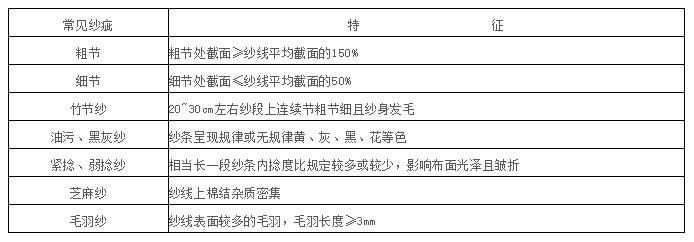
Rotor Spinning Yarn Defects and Their Characteristics
Equipment Mechanical Conditions and Yarn Defects
(1) Thick and thin places in yarn are mainly caused by poor conditions of the feeding unit. Mechanical reasons include damaged feed trumpet, lint buildup on feed rollers, damaged bearings, jamming, erratic rotation, improper clutch clearance, and worn gears.
(2) Slub defects in yarn are associated with poor conditions of the opening roller, such as burrs, hooked teeth, broken teeth or lint wrapping on the opening roller, excessively low rotational speed, sluggish shaft rotation, and improper clearance with the housing. Excessive clearance between the rotor and sealing cap, as well as burrs and lint clinging to the rotor collecting groove, also lead to slub yarn.
(3) Weak twist in yarn is mainly related to twisting elements including the rotor. Causes include air leakage due to unsecured spinning units or failed sealing rings, insufficient pressure or inflexible rotation of the rotor press roller causing rotor slippage, low rotor negative pressure, and damaged tangential belts, all of which result in weak-twist yarn.
(4) Damage and roughening of components such as the twist stopper, yarn delivery tube, and yarn guide will inevitably abrade the yarn strand, causing fuzzy yarn.
(5) Poor functioning of the waste removal system produces sesame yarn with dense neps and impurities. Examples include worn opening roller teeth impairing impurity removal, clogged waste removal holes, accumulated impurities in the waste chamber, and blocked process exhaust preventing impurity discharge. For self-purging rotor spinning frames in particular, poor process exhaust leads to severe end breakage on several spindles at the headstock, making startup difficult. Embedding of hard impurities in the rotor collecting groove also causes periodic unevenness and strength variation in yarn.
(6) Poor package formation mainly results from faulty conditions of the yarn delivery and winding unit, such as grooved delivery aprons, improper pressure application, excessive or insufficient tension draft, and damaged yarn guides.
Operational Practices and Yarn Defects
(1) Introduction of fly and waste during piecing, as well as poor lapping of sliver joints, create thick places, thin places, or slubs in finished yarn.
(2) Incomplete cleaning of the rotor during piecing (for self-purging types), delayed piecing after end breakage, piecing with oily hands leading to oil stains, and yarn contamination from dropped packages or unclean containers result in grayish yarn and oil-stained yarn.
(3) Mixing of old and new cotton slivers, misuse of slivers, or broken input sliver during operation cause color differences or non-conformity of yarn count and specifications between packages.
Maintenance and Yarn Defects
(1) Excessive or insufficient pressure on the feed plate causes sliver stratification and unintended draft, increasing the weight unevenness of finished yarn.
(2) Improper installation of the feed trumpet and premature cotton feeding by the feed roller during doffing and piecing result in thick or thin places in yarn.
(3) Improper installation of the separator, inappropriate or incomplete cleaning cycles of the rotor cause uneven yarn evenness and grayish yarn. Misuse of the twist stopper leads to color differences or fuzzy yarn due to twist unevenness.
Working Environment and Yarn Defects
(1) Airborne dust in the workshop directly influences rotor yarn defects. Excessive dust (including short fibers below 5mm) is drawn into spinning units with large volumes of air. Accumulation in the yarn path causes thick and thin places, slubs, and coal-dust-like yarn. Therefore, reducing dust concentration is critical to improving yarn quality and minimizing defects. This can be achieved by: housing rotor spinning frames in a separate workshop isolated from heavy-dust front-processing areas; and reducing internal dust sources by increasing waste suction and process exhaust air volumes, preventing exhaust duct blockage, and avoiding dust overflow.
(2) The effect of workshop temperature and humidity on yarn defects: Yarn defects remain stable within a certain temperature range but increase beyond limits. Suitable conditions are a temperature of 28℃ and relative humidity of 60%–70%. Requirements vary between winter and summer: winter temperature above 20℃ with relative humidity 60%–65%; summer temperature below 30℃ with relative humidity 65%–70%.
Post time: Apr-08-2026